

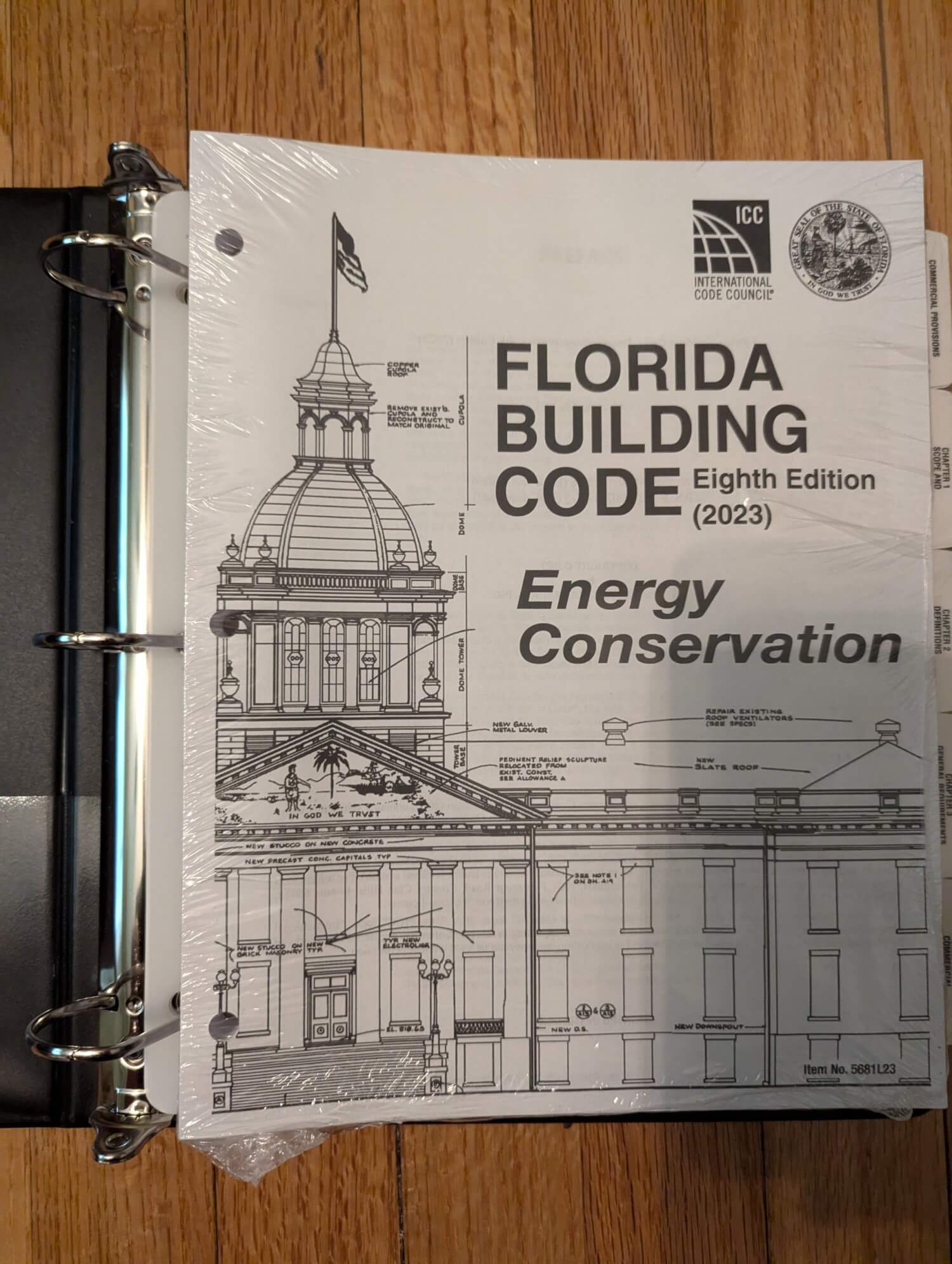
Florida Building Code: Energy Conservation – Eighth Edition (2023)
$67.00
Florida Building Code: Energy Conservation (FBC Energy), 8th Edition, updated for 2023.
The FBC Energy Conservation volume sets Florida’s energy-efficiency standards for insulation and building systems, and is essential reading for the Residential Contractor License. It ships as the current 2023 edition so your projects stay energy-efficient and code-compliant.
In stock
-
Description
In short: Florida Building Code: Energy Conservation, Eighth Edition (2023), is the 2023 Florida energy code in book form. It sets the state’s minimum energy-efficiency requirements for residential and commercial buildings and is essential reading if you are applying for a Florida Residential Contractor License. The price is $67.
What’s included
- The 8th Edition of the code, updated for 2023
- Requirements for insulation, windows and doors, HVAC, lighting and water heating
- Rules on building envelope tightness, plus blower door and duct leakage testing
FBC 8th Edition updated for 2023
Welcome to the future of sustainable living with the FBC 8th Edition (Florida Building Code: Energy Conservation). This comprehensive code is essential reading for those wanting to get the Residential Contractor License in Florida and is designed to reduce energy consumption, lower utility bills, and promote environmentally friendly building practices throughout the Sunshine State. By adhering to these guidelines, builders, developers, and homeowners can ensure their properties are not only energy-efficient but also resilient and compliant with state regulations. Let’s delve into the key features, benefits, and reasons why adopting the Florida Building Code: Energy Conservation is the best choice for your next construction or renovation project.
Focal Points
- Stringent Insulation Requirements
- The code mandates high R-value insulation for walls, roofs, and floors, ensuring minimal heat transfer and maintaining comfortable indoor temperatures year-round.
- Advanced insulation techniques reduce reliance on heating and cooling systems, contributing to significant energy savings.
- Energy-Efficient Windows and Doors
- Strict standards for window and door U-factors and solar heat gain coefficients (SHGC) enhance thermal performance and reduce energy loss.
- Emphasis on double or triple-pane windows with low-emissivity (Low-E) coatings.
- High-Efficiency HVAC Systems
- Requirements for high-efficiency heating, ventilation, and air conditioning (HVAC) systems that meet or exceed ENERGY STAR® standards.
- Encouragement of smart thermostats and zoned HVAC systems for optimal energy management.
- Renewable Energy Integration
- Provisions for the incorporation of solar photovoltaic (PV) systems, solar water heating, and other renewable energy technologies.
- Incentives for net-zero energy buildings that produce as much energy as they consume.
- Advanced Lighting Standards
- Mandates for energy-efficient lighting solutions, including LED fixtures and smart lighting controls.
- Emphasis on natural daylighting techniques to reduce artificial lighting needs.
- Water Heating Efficiency
- Guidelines for high-efficiency water heaters, including tankless, solar, and heat pump water heaters.
- Recommendations for water-saving fixtures and practices to complement energy conservation efforts.
- Building Envelope Tightness
- Requirements for air sealing to minimize drafts, leaks, and energy loss.
- Emphasis on proper ventilation to maintain indoor air quality while preserving energy efficiency.
- Energy Modeling and Performance Testing
- Encouragement of energy modeling software to predict energy use and optimize building design.
- Requirements for blower door tests and duct leakage tests to verify compliance with airtightness standards.
The Sunshine State demonstrates its leadership through energy conservation through its Florida Building Code. The Florida Building Code: Energy Conservation (FBC 8th Edition 2023) functions as an important standard for the construction industry to build energy-efficient buildings. This publication is an essential resource for builders, designers, architects, and all others who require knowledge of the subject.
What is the Florida Building Code: Energy Conservation?
The Florida Building Code: Energy Conservation represents a component of the state-wide building regulations which establish the least requirements for building energy efficiency. Its purpose is to minimize energy usage in commercial and residential buildings as well as decrease the environmental impact of construction activities. The code addresses numerous elements in building design and construction such as insulation, heating and cooling systems, lighting and water heating.
The most recent version of this code is the 2023 edition or FBC 8th Edition that implements the latest developments in energy conservation technology and design trends.
What is the significance of the FBC 8th Edition 2023?
The FBC 8th Edition 2023 serves as a fundamental component in Florida’s pursuit of sustainable development beyond its role as a guide. The code achieves its strict energy conservation requirements to lower utility expenses for individuals and businesses while advancing renewable energy adoption and supporting environmental well-being. The code functions as a critical element in climate change mitigation because it establishes requirements for buildings to be energy-efficient during their design and construction phase.
Staying Updated with the FBC 8th Edition 2023
All participants within the construction industry must maintain awareness of the current version of the Florida Building Code: Energy Conservation. The FBC 8th Edition 2023 distributed by License To Pass serves as a vital resource that delivers complete information regarding the code’s updated standards and modifications. The publication serves as a fundamental resource for builders architects and designers who need to fulfill Florida’s energy conservation standards while developing sustainable energy-efficient buildings.
Key Takeaways from the FBC 8th Edition 2023
The FBC 8th Edition 2023 contains substantial information about energy conservation standards along with implementation guidelines. The following key points emerge from the FBC 8th Edition 2023:
- The document contains comprehensive details about current energy conservation standards along with necessary requirements.
- The document provides functional instructions about implementing these standards within building designs and construction.
- The document contains professional guidance about modern energy-efficient solutions together with their corresponding technologies.
The Florida Building Code: Energy Conservation demonstrates Florida’s dedication to both energy conservation and sustainability practices. Builders and architects who remain informed about the FBC 8th Edition 2023 standards will both fulfill state building regulations and work towards environmental sustainability. Purchase your copy at License To Pass to begin designing energy-efficient buildings.
The 8th Edition Florida Building Code provides a detailed framework for FBC Energy Conservation through this guide.
Today’s fast-moving environmental changes make energy conservation a priority issue. All people including homeowners and builders look for successful methods to reduce their energy consumption while creating sustainable future environments. The Florida Building Code (FBC) serves this purpose through its 8th Edition FBC Energy Conservation 2023 standard.
Understanding FBC Energy Conservation
The FBC Energy Conservation guidelines establish specific standards which direct the construction industry toward energy efficiency. The Florida Building Code includes this set of standards as part of its complete framework for building regulations in the state. The FBC Energy Conservation 2023 edition serves as the current version that guides builders architects and contractors toward constructing energy-efficient environmentally sustainable buildings.
Why the FBC Energy Conservation 2023 Matters
The FBC Energy Conservation 2023 represents more than a collection of rules. This tool has the power to help us minimize our environmental impact and fight climate change and generate financial savings in the long term. The energy-efficient standards established by this document lead to substantial reductions in energy usage throughout a building’s operational period. The reduced energy consumption enables occupants to pay lower utility bills while decreasing power grid pressure and reducing greenhouse gas emissions.
Key Features of the FBC Energy Conservation 2023
The FBC Energy Conservation 2023 delivers detailed instruction for building energy-efficient practices through multiple aspects.
The standards for building envelope requirements specify how well exterior walls should be insulated and sealed for energy preservation purposes.
– The guidelines established by these standards ensure heating cooling and ventilation systems use energy efficiently.
– The regulations focus on minimizing energy usage through interior and exterior lighting systems.
Learning and Implementing FBC Energy Conservation
The FBC Energy Conservation 2023 provides essential guidelines for building professionals yet its application presents challenges to implement these standards. The “FBC 8th Edition – Florida Building Code: Energy Conservation (2023)” provides essential help to building professionals who need guidance. The guide provides License to Pass subscribers with a complete simplified explanation of the code. All participants in Florida’s construction industry need to have this resource as their essential guide.
The FBC Energy Conservation 2023 requires more than rule compliance because it establishes pathways to develop sustainable environments for every community. These guidelines help us create buildings that use less energy while saving costs and helping combat climate change. The “FBC 8th Edition – Florida Building Code: Energy Conservation (2023)” is available at License to Pass where you can purchase it to begin your sustainability efforts.
Energy conservation stands as an absolute requirement because it protects our future. Through the FBC Energy Conservation 2023 we can establish this reality.
Florida energy code: edition, basis and structure
The Florida energy code is the Energy Conservation volume of the single statewide building code, which the Florida Building Commission adopts and maintains under Florida Statutes Chapter 553. This 8th Edition (2023) took effect on December 31, 2023 and adopts the International Energy Conservation Code 2021 (IECC 2021) with Florida amendments. It is organized into a Commercial Energy Efficiency division and a Residential Energy Efficiency division, and its appendices address solar-ready zones and electric vehicle charging infrastructure. Florida sits in IECC climate zones 1 and 2 (hot-humid), which is why the requirements stress solar heat gain and moisture control. Source: floridabuilding.org.
Frequently asked questions
Save with the set: this title is one of the approved Florida contractor reference books. Get the Florida General Contractor Exam Prep and Books Bundle, which adds Essential Test Prep and costs less than buying the books and the prep separately, or the books-only bundle, or add the related Energy Efficient Building Construction in Florida. New to the process? Start with our Florida General Contractor license guide.
Reviews
There are no reviews yet.